Road 01
Twenty doors
Every entry of a single working life, dated, with the way it opened and the name of whoever held the handle. Switch the kinds off to see what the career looks like without them.
How it opened
-
1938
Canada
Aged ten, he arrives in Montreal because his father has been posted there as Poland's consul-general. He sails from Europe to New York in the autumn of 1938 — the same season, on the same ocean, as a fifteen-year-old Jewish refugee from Fürth named Henry Kissinger.
Circumstance The Polish foreign ministry Library of Congress ↗
-
1939–1945
Staying
The war closes behind him and the country he was a diplomat's son of stops existing in the form his family served. A posting becomes a life.
Circumstance Nobody Justin Vaïsse ↗
-
1945–1950
McGill University
BA in 1949, MA in 1950. His master's thesis is titled Russo-Soviet Nationalism — the argument he spends the next sixty-seven years on, written at twenty-two. The typescript is in his papers at the Library of Congress.
Applied McGill admissions Library of Congress ↗
-
1950–1953
A Harvard doctorate
PhD 1953, then instructor and research fellow at Harvard's Russian Research Center.
Applied Harvard admissions Library of Congress ↗
-
1956
Assistant professor, Harvard
Assistant professor of government and research associate at the Russian Research Center and the Center for International Affairs. The same year he publishes The Permanent Purge, and, with Carl Friedrich, Totalitarian Dictatorship and Autocracy.
Appointed Harvard Library of Congress ↗
-
1958
United States citizenship
Naturalised at thirty. It is the last door on this list that any adult in the country could have walked up to on the same terms.
Applied Statute Library of Congress ↗
-
1959
Tenure at Harvard
The Department of Government had no room. The tenured chair that year went to Henry Kissinger. Eighteen years later the two men would have held the same office in the same building.
Had I been given tenure at Harvard, I would have been delighted and I would have stayed. But then I was forced to think, what do I really want to be? … I want to influence the world, shape American policy. And New York was better for that.
Brzezinski, quoted in VaïsseRefused The Harvard Department of Government Justin Vaïsse ↗
-
1960
Columbia University
Associate professor; full professor from 1962, and director of the Research Institute on Communist Affairs — an institute the Ford Foundation helped build.
Appointed Columbia Library of Congress ↗
-
1961
The Council on Foreign Relations
Membership is by nomination and election; there is no application. Hamilton Fish Armstrong, the editor of Foreign Affairs, takes him under his wing. His first article in the journal comes at thirty-three.
Brzezinski, for his part, was made a member in 1961.
Vaïsse — note the voice of the verbInvited The Council Justin Vaïsse ↗
-
1966–1968
The State Department's Policy Planning Staff
His first door into government. He does not apply. Henry Owen, then director of Policy Planning, and Walt Rostow, then National Security Adviser, offer him the position. Owen will be in the room six years later when the Trilateral Commission is agreed.
Invited Henry Owen and Walt Rostow Justin Vaïsse ↗
-
1968
A presidential campaign
Principal foreign policy adviser to Hubert Humphrey, whom he had come to know at Policy Planning. He accepts an invitation to lead the campaign's foreign policy team.
Invited Hubert Humphrey Justin Vaïsse ↗
-
1970
A column in Newsweek
The same year he publishes Between Two Ages. A column is a rung on the escalator, not a job: it is what makes an administration consult you.
Invited Newsweek Justin Vaïsse ↗
-
1960s–1970s
Bilderberg
Attended repeatedly. Admission is by invitation and there is no way to seek it.
Invited The Bilderberg steering committee Justin Vaïsse ↗
-
1971
A year in Japan
Paid for by a Ford Foundation grant. Vaïsse links that year directly to what came next.
Invited The Ford Foundation Justin Vaïsse ↗
-
1973–1976
Director of the Trilateral Commission
The body he had described in print three years earlier. As Director his job is to identify and invite the members — the first door on this list that he is standing on the other side of.
Appointed David Rockefeller and the regional chairmen Rockefeller Archive Center ↗ Topic 04 →
-
1975–1976
Jimmy Carter
He had been offering his services to several candidates at once. In 1975 he settles on the governor the Commission had picked, and by early 1976 is his chief foreign policy adviser.
Invited Jimmy Carter Library of Congress ↗
-
December 1976
Assistant to the President for National Security Affairs
No Senate confirmation. No statutory basis. No routine testimony to Congress. One person decides, and that person had been a member of the body he directed.
Appointed The President-elect, alone National Archives and Records Administration ↗
-
16 January 1981
The Presidential Medal of Freedom
Four days before the administration ends. Harold Brown and Gerard C. Smith are decorated in the same ceremony.
Appointed The President, alone Public Papers of the Presidents ↗
-
1981
Counselor, Center for Strategic and International Studies
Out of the White House and straight into the think tank, while returning to his Columbia chair. He holds a position in the policy world for the next thirty-six years.
Appointed CSIS Library of Congress ↗
-
1989
The Robert E. Osgood chair, Johns Hopkins SAIS
Thirty years after Harvard had no room for him, a chair is named and he is put in it.
Appointed Johns Hopkins Library of Congress ↗
Road 02
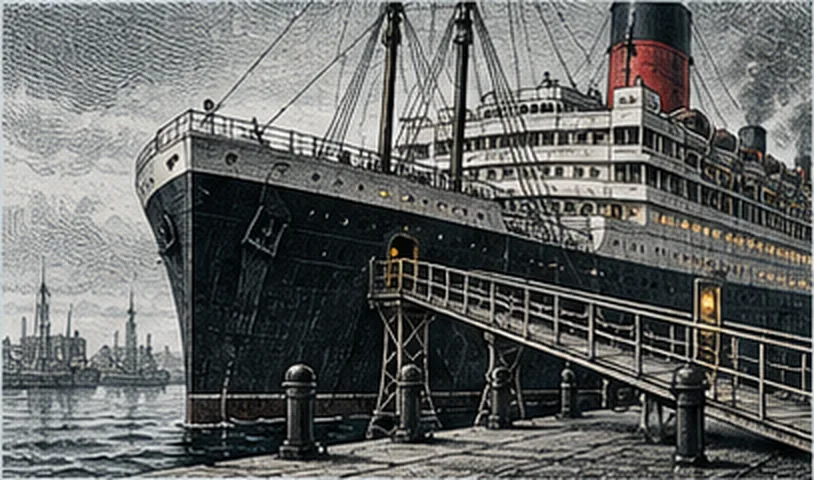
Two crossings, one autumn
Two men entered the United States in the same season on opposite terms — one fleeing a state, one representing one — and arrived at the same desk eight years apart. Whatever the pipeline selects for, it is not origin.
Both sailed from Europe to New York in the fall of 1938 — Kissinger a Jewish refugee fleeing persecution from the Third Reich, Brzezinski the son of a Polish diplomat to be posted in Montreal as consul general.
Henry KissingerZbigniew Brzezinski
BornKissingerFürth, 1923BrzezinskiWarsaw, 1928
CrossedKissingerAutumn 1938, as a refugeeBrzezinskiAutumn 1938, as a diplomat's son
DoctorateKissingerHarvardBrzezinskiHarvard
Harvard tenure, 1959KissingerGrantedBrzezinskiRefused
National Security AdviserKissinger1969, under NixonBrzezinski1977, under Carter
Secretary of State alongsideKissingerWilliam RogersBrzezinskiCyrus Vance
Road 03
The door that shut
One entry on the list was refused. Harvard’s Department of Government had no room in 1959, and the tenured chair went to the other immigrant. He was thirty-one, and it is the hinge of the whole life.
Had I been given tenure at Harvard, I would have been delighted and I would have stayed. But then I was forced to think, what do I really want to be? … I want to influence the world, shape American policy. And New York was better for that.
In the same answer he describes the life he did not want: crossing the Harvard yard year after year carrying a folder marked lecture number 7, joke used last year, class reaction, in a tweed jacket.
Two years later Harvard offered him a tenured chair and he turned it down. Thirty years after that, Johns Hopkins named a chair and put him in it. The only door that ever closed on him closed for one year.
Road 04
The escalator, already written down
The route from a university office to a government one was not a secret and not an accident. His biographer sets it out as a sequence, in a book written from his own papers.
After a scholarly book, publishing a more policy-oriented piece in Foreign Affairs made you an interesting potential contributor to the New York Times. An op-ed in the Times or a piece in Newsweek would then catch the eye of the administration, which would consult you. That would lead a think tank to invite you into its task force and the Bilderberg to admit you as a member, offering in turn new social connections, increasing your value as a prominent university professor, and ultimately making you an influential public expert.
- 01A scholarly bookThe Permanent Purge, 1956. The Soviet Bloc, 1960.
- 02A piece in Foreign AffairsFirst published there at thirty-three, under Hamilton Fish Armstrong.
- 03An op-ed, or a columnA Newsweek column from 1970.
- 04The administration consults youPolicy Planning Staff, 1966–68.
- 05A think tank puts you on a task forceCouncil task forces; later CSIS.
- 06A closed body admits youThe Council in 1961; Bilderberg through the 1960s and 1970s.
- 07You are an influential public expertFifteen books, two universities, four decades.

Road 05
Where he thought it ended
Asked later how far he had expected to get, he answered plainly, and the answer is the most human thing in the record.
In 68, I worked for Hubert Humphrey, I was his principal foreign policy advisor. … To give you a sense of how modest my expectations were, I thought maybe I might become an Assistant Secretary of State for Europe. Well, it may be strange, but I wasn't ready, and what suddenly boosted my expectations was Henry. Nixon won, he made Henry. It never occurred to me he would get that. It never occurred to me when I was Humphrey's principal advisor that I could be National Security Advisor. It was not in my sense of what was feasible in America at that time.
Road 06
He worked it
He worked the pipeline, and his own papers show it.
- 1972
Sends analyses, talking points and suggestions to Hubert Humphrey through intermediaries as Humphrey seeks the nomination again.
- 1972
Sends some of the same memos and talking points, unchanged, to Edmund Muskie and Ted Kennedy. Vaïsse calls it an older version of cut and paste.
- 1972
Also sends material to Henry 'Scoop' Jackson.
- 1975
Stops hedging. Settles on one candidate and, in Vaïsse's phrase, becomes a monogamous adviser.

Road 07
Carter was a slot
The candidate who would appoint him was not discovered. He was recruited to fill a gap in a membership table, and the man holding the pen was the man who would be appointed.
In 1973, while composing the American membership, he and his colleagues needed a Democratic governor from the rapidly industrializing South, and they picked Carter, who proved an eager student at the Commission meetings, since he was lacking international experience.

Road 08
The last door has no lock on the outside
Of every entry on the list, the final one is the only office that no vote, no committee and no statute stands in front of. Congress says so itself.
Is it subject to Senate confirmation?
“The National Security Adviser is not subject to confirmation by the Senate.”
Congressional Research Service, Library of CongressHas anyone tried to change that?
“Proposals to require Senate confirmation of the Security Adviser have been discussed but not adopted.”
Congressional Research Service, Library of CongressDoes Congress hear from the office?
“Congress annually appropriates funds for its activities, but does not, routinely, receive testimony on substantive matters from the National Security Adviser or from NSC staff.”
Congressional Research Service, Library of CongressCyrus Vance, who sat across from him for three years, was confirmed by the Senate. So was Harold Brown. So was Gerard C. Smith, as an ambassador. The adviser was not.
Twenty-one doors, and the last one has no lock on the outside. It is the only office in the sequence that no vote, no committee and no statute stands in front of — and it is the one the whole escalator was pointed at.

Road 09
What came out from behind it
What the unconfirmed office produced was the least filtered document series in the government.
- Begun about a month after the inauguration and continued for four years.
- Written by one man to one reader, and described by the archive as intended for the President's eyes only.
- Did not pass through institutional filters — not the State Department secretariat, not the NSC's.
- Many carry Carter's handwritten replies in the margin.
NSC Weekly Report #122
Written three weeks into the hostage crisis, the memo presses the President to consider military action and steps to remove Ayatollah Khomeini.
In the margin Carter's handwritten notes show he is not opposed to planning for all possible approaches, so long as they do not open the United States to international condemnation.
Beyond the rescue attempt, the administration did not take up the more dramatic proposals.
Road 10
What a list of doors does not show
A door opening says who decided. It does not say whether the decision was right, and it says nothing at all about the person on the other side of it.
Does a sequence of opened doors mean the man had no merit?
No, and the record points the other way. He published fifteen books across sixty-one years, held chairs at two universities, and wrote a master's thesis at twenty-two on the subject he was still writing about at eighty-eight. The doors opened onto someone who had done the work.
What would settle it
Nothing. Both things are true at once, and a page that could only hold one of them would be the weaker page.
Does it mean the doors were unearned?
Unanswerable from a list of doors. What the list shows is the shape of the access, not its justice: three applications, no elections, and everything else decided by someone already inside.
What would settle it
A comparison population — scholars of the same cohort, output and field who were never invited. Nobody has assembled one.
Is this the whole man?
Not remotely. The Library of Congress holds 163,200 items of him across 189 linear feet, in English, Polish, Russian, French and Chinese, including journals, appointment books and family papers reaching back to 1798. This is one dimension of a life, chosen because it is the dimension the rest of this series is about.
What would settle it
The papers themselves. Part of the collection is still classified.
Is the pipeline a conspiracy?
It is a published description. The sequence quoted above comes from a standard scholarly biography, written from his own papers, and it is offered there as a description of how a profession worked, not as an accusation. Nothing here is concealed and nothing here needed to be.
What would settle it
Nothing.
Road 11
The record
Seven sources. Two are archival finding aids, one is Congress describing its own blind spot, one is a scholarly biography written from the man’s own papers, and one is the man receiving a medal. Where a source is scholarship rather than a filing, it is marked.
- Zbigniew Brzezinski Papers — finding aid ↗Library of Congress, Manuscript Division · Filed163,200 items, 470 containers, 189 linear feet, spanning 1798–2017. Carries the dated biographical chronology used for most of the doors on this list, and the scope note describing the campaign and NSC files.
- Zbig, Henry, and the New U.S. Foreign Policy Elite ↗Justin Vaïsse, chapter 1 of Zbigniew Brzezinski: America's Grand Strategist (Harvard University Press, 2018) · PublishedThe standard scholarly biography, written from the Brzezinski Papers and published in full as a PDF by Johns Hopkins. The source for the escalator, the tenure vote, the Policy Planning offer, the 1972 hedging and the Carter slot. Scholarship, not a filing.
- Zbigniew Brzezinski Collection: A Guide to His Papers at the Jimmy Carter Library ↗National Archives and Records Administration · FiledThe federal half of the record: the directorship, the invitation duty, and the December 1976 appointment.
- The National Security Council: An Organizational Assessment (RL30840) ↗Congressional Research Service, Library of Congress · FiledCongress's own description of the office: not Senate-confirmed, not statutory, and not a routine witness before committees.
- Presidential Medal of Freedom — Remarks at the Presentation Ceremony ↗Public Papers of the Presidents, 16 January 1981 · StatedThe citation, and Carter's remarks naming him the most controversial member of the administration.
- Brzezinski NSC Weekly Reports to the President ↗National Security Archive, George Washington University · FiledThe declassified weekly memos, several published in facsimile with Carter's marginal replies. Report #122 of 21 December 1979 is the one quoted here.
- The Trilateral Commission (North America) records — finding aid ↗Rockefeller Archive Center · PublishedThe body's own deposited records. Used here only for the dates and terms of the directorship.
Road 12
Circulate
Eight cards. Each is one entrance, or one sentence he said about them, and each links back here.